
METHODOLOGY
Inside-Out
Sustainability


METHODOLOGY
Inside-Out
Sustainability
Change starts from within.
Impact professionals are trained in subject matter. But no one trains you to be influential. Inside-Out Sustainability teaches you to lead with influence — because that’s what actually creates change.
This is a methodology for doing sustainability work differently: by building your capacity to position yourself strategically, cultivate trust, and design for buy-in, even in structurally misaligned systems.
Because you can have perfect subject matter expertise. But if you don’t know how to influence the people who hold power, nothing moves.
This is the order that works:
Identity → Relationship → influence designYou cannot shortcut trust. You cannot bypass integrity. You cannot design influence strategy without context.
Most training starts at Phase 3. Inside-Out Sustainability starts at Phase 1.
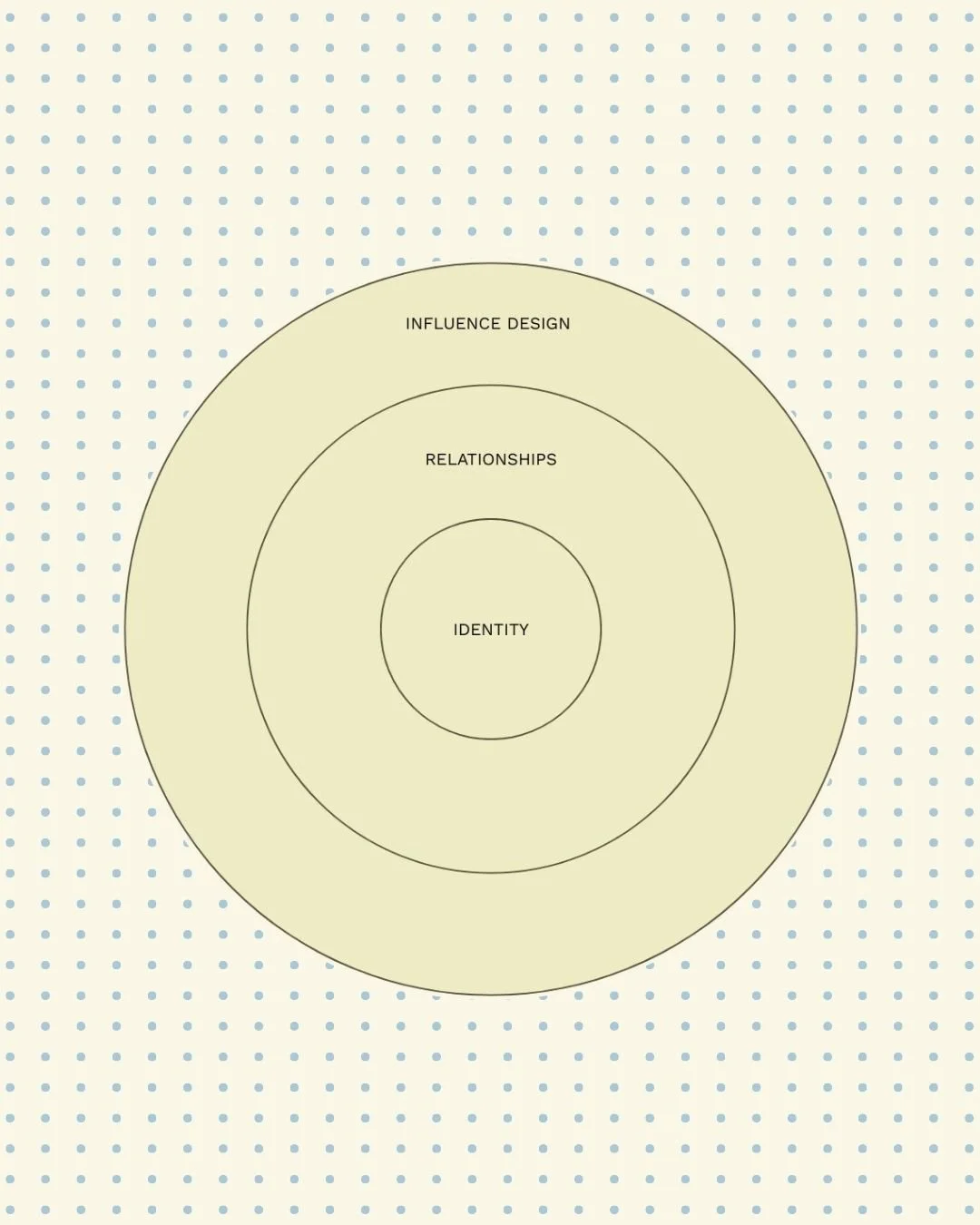
The TRUST-BUILDING workThe execution workThe internal workMETHODOLOGYThree Phases of Inside-Out Sustainability
Influence happens in a specific order. Most training skips straight to tactics. Inside-Out Sustainability starts three layers deeper.
THE INTERNAL WORK
Phase 1: Identity
What it is:
Understanding who you are in the system. Clarifying your role (influence, not execution). Building credibility through consistency, not charisma. Regulating your emotional capacity to sustain this work long-term.
Why it matters:
You cannot influence effectively if you are not internally aligned. This is your foundation — your positioning, your integrity, your ability to show up grounded in high-stakes moments.
The work:
Role realisation (your job is influence, not doing it all)
Emotional regulation (managing responsibility without authority)
Self-awareness (understanding how you show up and why)
THE TRUST-BUILDING WORK
Phase 2: Relationships
What it is:
Building trust before you need it. Understanding stakeholders' incentives, fears, and pressures — not just mapping them. Creating psychological safety so people can say yes without risk.
Why it matters:
People are open to influence when they feel understood. Trust precedes logic. You cannot shortcut this.
The work:
Deep stakeholder understanding (actual empathy, not just analysis)
Contextual intelligence (speaking their language, not yours)
Relational positioning (strategic partner, not sustainability police)
THE EXECUTION WORK
Phase 3: Influence Design
What it is:
Designing your influence approach based on stakeholder context. Structuring conversations for buy-in. Planting seeds before high-stakes moments. Asking for small commitments before big ones.
Why it matters:
Influence is designed, not improvised. This is where tactics matter — but only when Phases 1 and 2 are in place.
The work:
Argument architecture (framing for their priorities, not yours)
Strategic translation (speaking in their currency — business outcomes, risk mitigation, competitive advantage)
Sequencing and momentum (designing the pathway to yes)
This is the order that works:
IDENTITY → RELATIONSHIPS → DESIGN
You cannot shortcut trust. You cannot bypass integrity. You cannot design influence strategy without context.
Most training starts at Phase 3.
Inside-Out Sustainability starts at Phase 1.
This methodology is for you if you're a sustainability or impact professional who:
Has responsibility without authority. Needs cross-functional buy-in but doesn't have formal power. Has had strategies approved that never get executed. Feels like you're pushing water uphill.
Your subject matter training never taught you to be influential.
But influence is the job.
This is for graduates to senior leaders — because leading without authority is the work, regardless of your title or place in the org chart.
Stop pushing.
Start positioning.


Stop pushing.
Start positioning.
This methodology is for you if you're a sustainability or impact professional who:
Has responsibility without authority. Needs cross-functional buy-in but doesn't have formal power. Has had strategies approved that never get executed. Feels like you're pushing water uphill.
Your subject matter training never taught you to be influential. But influence is the job.
This is for graduates to senior leaders — because leading without authority is the work, regardless of your title or place in the org chart.
YOU CAN'T CREATE CHANGE
·
YOU CAN ONLY INFLUENCE IT
·
YOU CAN'T CREATE CHANGE · YOU CAN ONLY INFLUENCE IT ·


Work With Me
Advisory
One-on-one guidance to develop an influence strategy that moves work forward.
coming soon
Training
Workshops and learning
to become influential,
not just informed.
coming soon
Tools
Guides, toolkits and frameworks to support your influence work.
Book an Advisory session and let’s develop your action plan to influence change from the inside-out.
Ready to lead with influence?
Book an Advisory session and let’s develop your action plan to influence change from the inside-out.